Traditions often provide a sense of hope for the future and peace in the past. While we might label a tradition as a superstition, deep down, a part of us holds onto the hope that our wishes will come true. Participating in these practices connects us to cultural diversity and also serves as a reminder of the promising journey ahead.
Frequently, we celebrate the arrival of the New Year with fireworks, delicious cuisine, and lively gatherings, within the confines of our homes with family or at organized public festivities with friends or colleagues. Apart from the celebrations, people in different parts of the world have some interesting traditions for New Year’s. As we prepare to welcome 2024, explore the possibility of engaging in New Year’s traditions from around the globe:
- Eating 12 Grapes – Spain: In Spain, it is a tradition to eat 12 grapes at midnight, one for every ring of the bell. If you manage it, you’re in for good luck in the coming year.
- Burning effigy- India: In certain parts of India, people set fire to the effigy of a man. The burning represents the release of grievances from the old year, creating room for the birth of a new year.
- Smashing Plates- Denmark: The tradition involves smashing old and unused dishes on the front doors as a symbol of good luck.
- Cold-water plunges- Scotland/Northern European countries: People often dressed in swimwear, take a brief dip into icy waters. In many places, this has turned into a fun way for communities to come together. There is a belief that cold water is good for health, as it improves the immune system and blood circulation. Doing this is also seen as a way to start the new year fresh and renewed.
- Burning Effigies- Ecuador: In Ecuador, people create life-sized effigies that are burned at midnight to symbolize leaving the old behind.
- Round Things – Philippines: People believe that having round objects like coins and fruit around brings good luck. Wearing polka dots and having round fruits are usual New Year’s customs.
- Bell ringing – Japan: As the clock strikes midnight on December 31, Buddhist temples throughout the country ring their bells 108 times. In Buddhism, number 108 holds significance, representing the earthly desires or temptations that lead to human suffering. The ringing of the bell is seen as a symbolic means of purifying the sins and desires of the past year, creating space for a new beginning in the upcoming year. It is believed to signify the removal of a specific desire or negative trait from individuals, fostering spiritual purification and a sense of renewal.
- Coloured Underwear – South America: In some regions of South America the fate of the upcoming year is supposedly determined by your choice of underwear. For those seeking love, donning red underwear on New Year’s is believed to be auspicious. If wealth and luck are the goals, people may choose yellow undergarments. For those desiring a peaceful Year, opting for white colour is considered a suitable choice.
- Throwing Items from Windows – Italy: In certain parts of Italy, there’s a custom of tossing old items, like pots and pans, out of windows as a symbolic gesture of letting go of the past and embracing the arrival of the new year.
- Falling Ice Cream – Switzerland: In Switzerland, a customary practice involves dropping a spoonful of ice cream on the ground to bring good luck for the upcoming year.
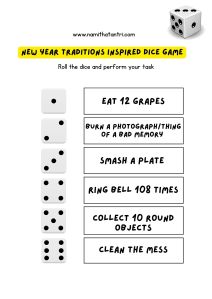
New year tradition-inspired Dice Game
If you’re searching for New Year’s games for family and friends, why not turn one of the good luck traditions into a fun activity? Well, I have good news for you, the New Year’s Eve game printable is now uploaded and is available for free!

 Namitha tantri
You must be logged in to post a comment.